If Bougatsa taught me that I really should bake with filo pastry more often, portokalopita taught me that I should be dousing cakes in orange syrup just as often. This Greek delight is made with baked and crushed filo (that will feel like a thousand paper cuts but it’s all worth it) and all the fresh orange juice summer demands. Olive oil and yoghurt bring it home and this is just an incredibly moist, impossibly delicious, very joyous cake to make.
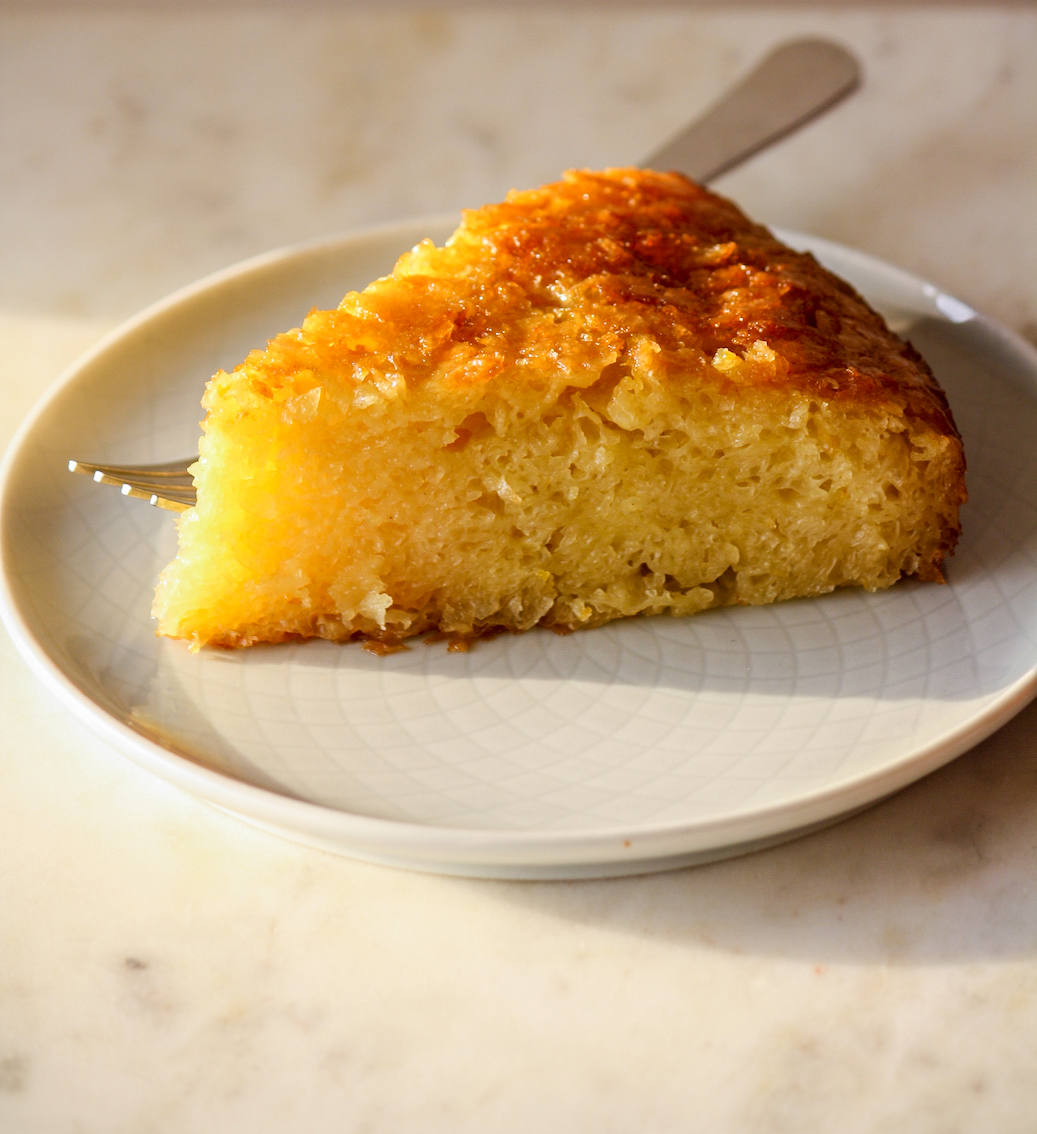
When I made the bougatsa, I also read about this cake on Food by Maria. Intrigued, I made a note to come back to it and when I decided to, realised I didn’t have quite as much filo leftover as most recipes required. Enter, cake maths, the best kind of maths. Scaling it down to an 8-inch cake worked out perfectly.
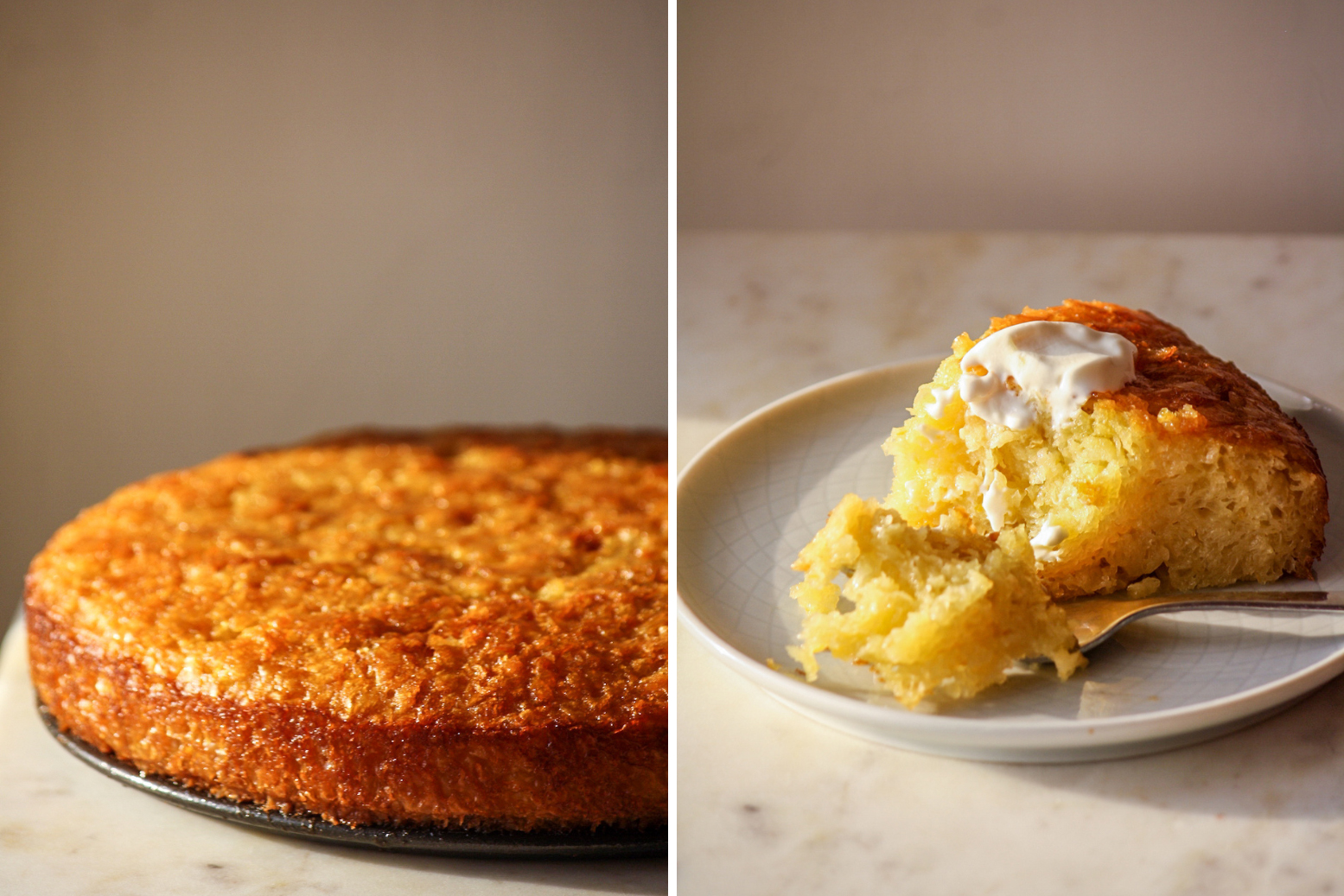
Portokalopita gets it name from the Greek words portokali or orange and pita or pie (think spanakopita). With plenty of orange juice in the batter along with some zest, this is what a refreshing dessert looks like. I like it best chilled with a little cream, but it can be enjoyed at room temperature too. The spongy texture is all of the dried filo crushed into pieces, which in itself is a really satisfying thing to do!
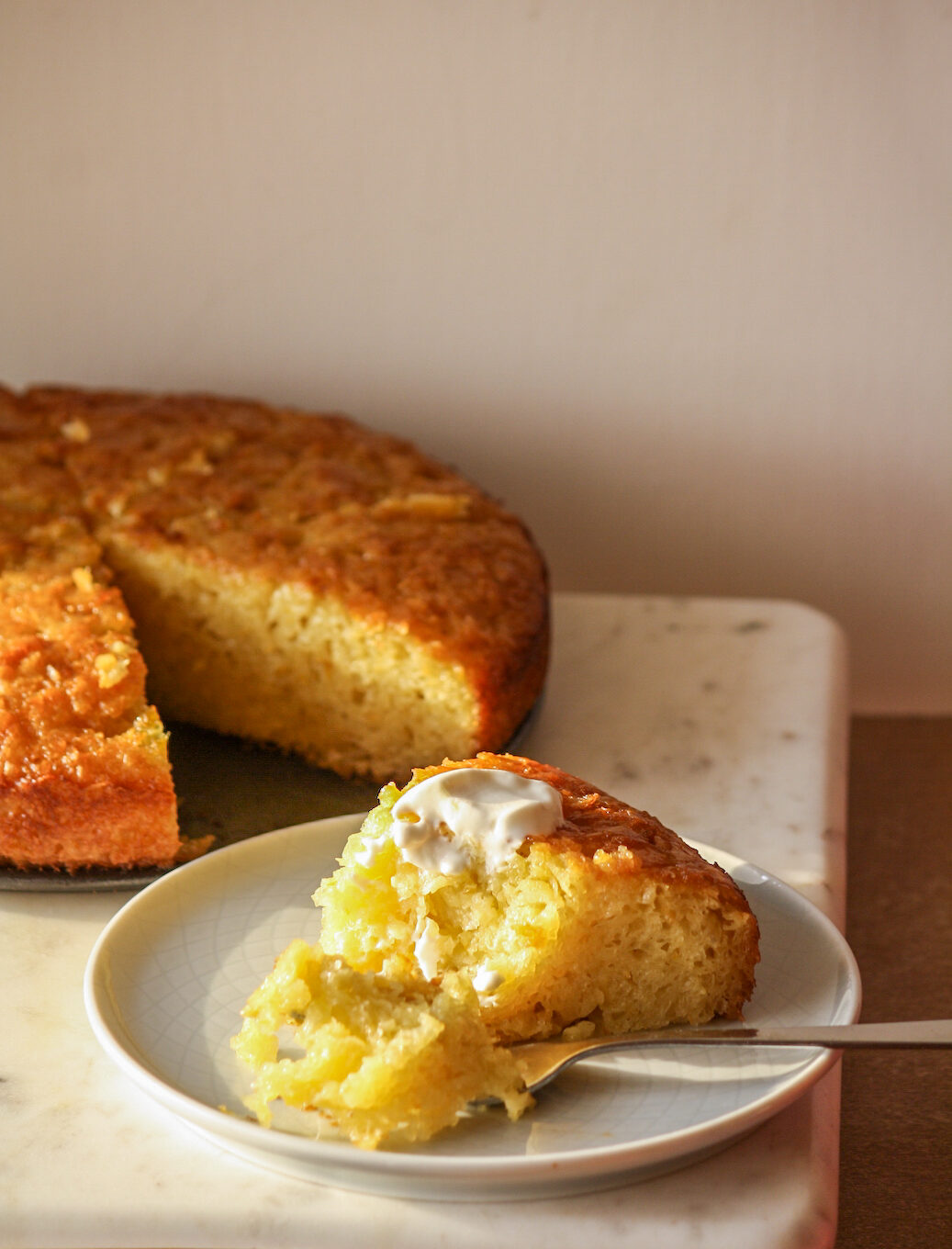
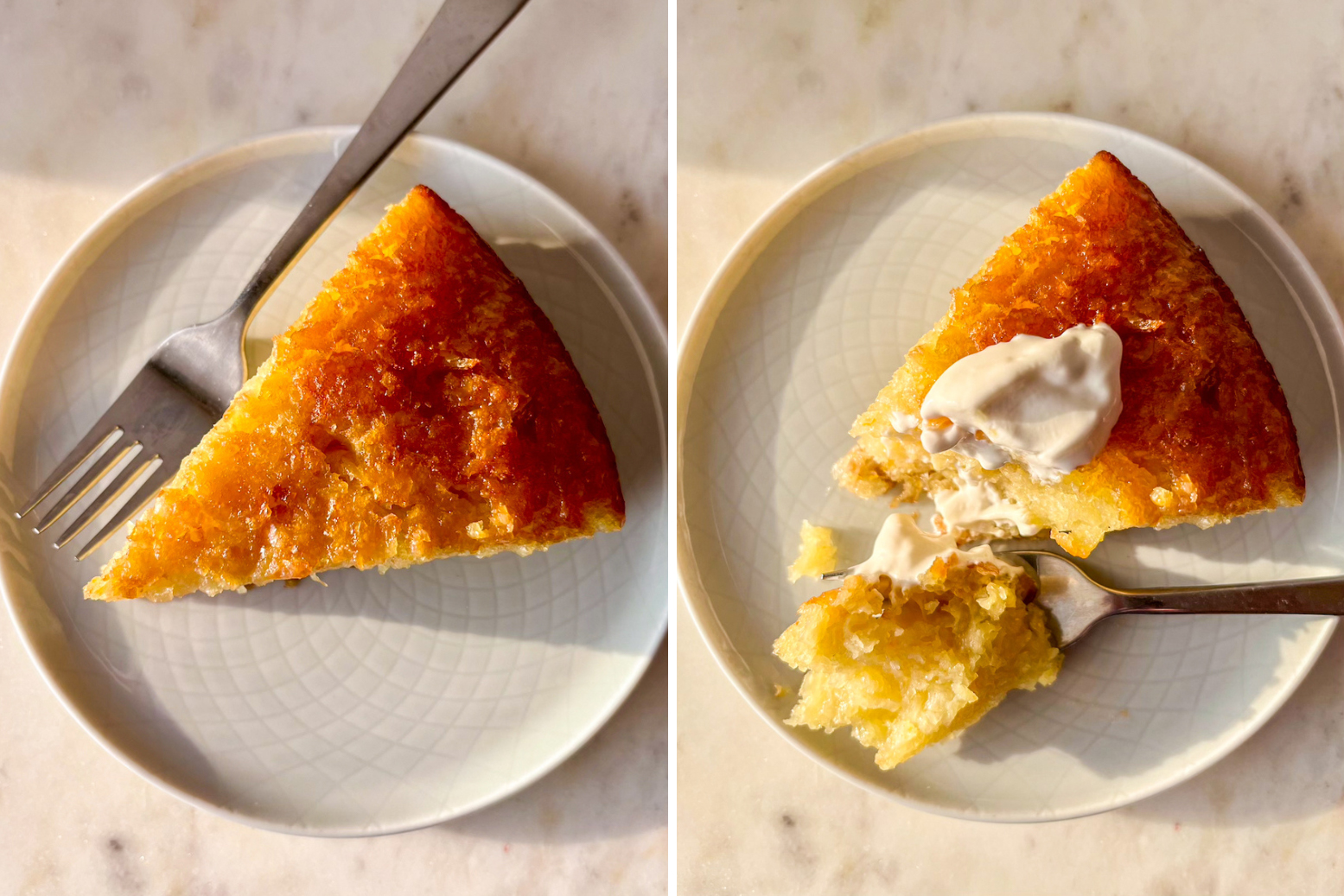
I really was blown away by how good this is and hope you will be too!
Portokalopita (Greek orange & filo cake)
Ingredients
For the orange syrup
- 3/4th cup sugar (140 gms)
- 3/4th cup freshly squeezed and strained orange juice (190 ml, from 2 to 3 oranges)
- 3/4th water (190 ml)
- 1 cinnamon stick
For the cake
- 225 gms filo pastry sheets, thawed if frozen
- 1/3rd cup caster sugar (65 gms)
- Zest of 1 orange
- 2 eggs, at room temp (I have not tried an eggless version)
- 1/2 cup Greek yoghurt (115 gms; thick homemade curd will work too)
- 1 tsp vanilla extract
- 1/2 tsp baking powder
- 1/2 tsp baking soda
- 1/2 cup olive oil (125 ml)
- 4 tbsps freshly squeezed orange juice (60 ml)
Instructions
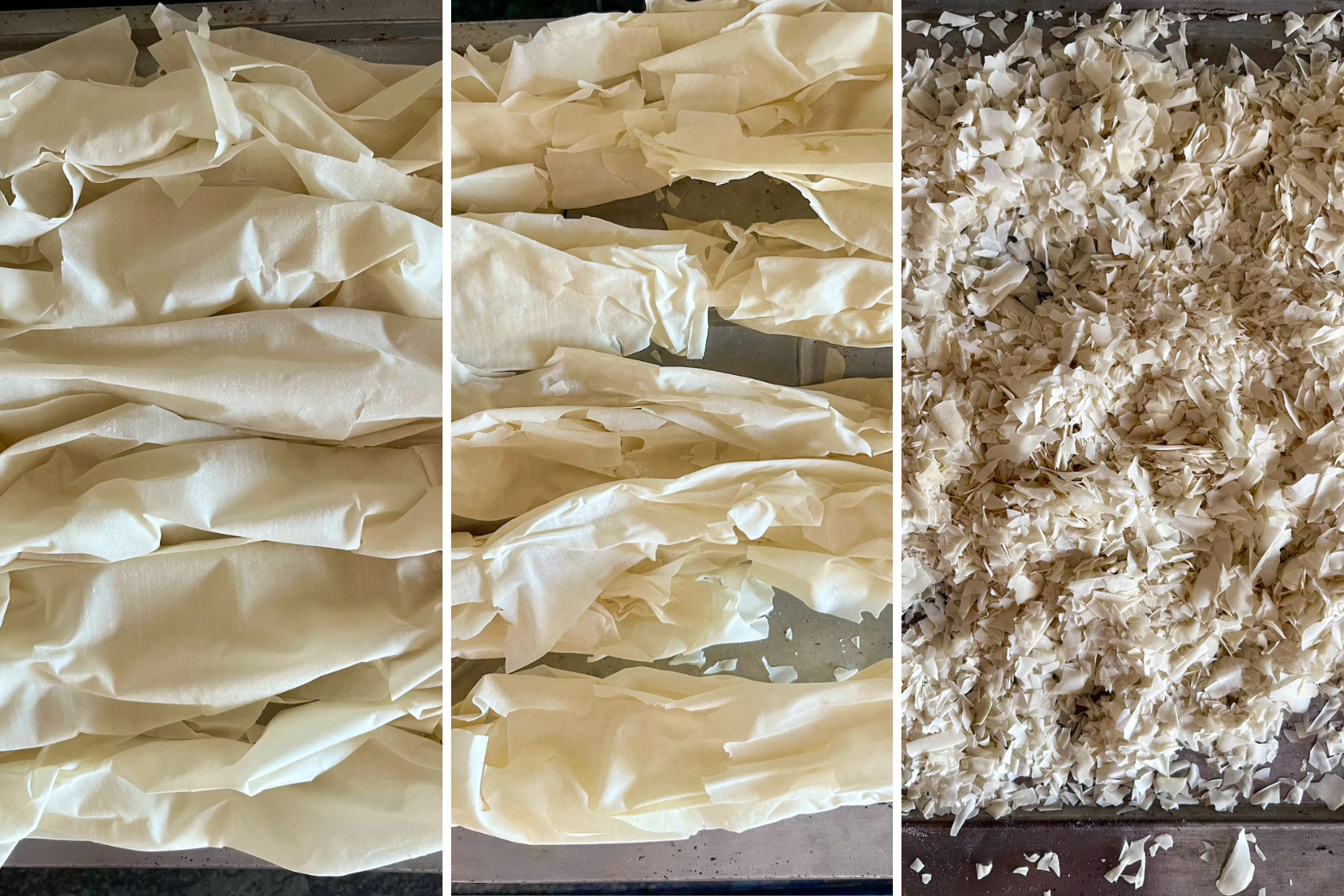
- First, get the filo ready. Preheat the oven to 100 C and lightly scrunch each filo sheet into a roll and place it in on an un-greased baking tray. If needed, do this step in batches. See photos below.
- Bake the filo for 20 to 30 minutes, turning each sheet over halfway through, until they feel very dry and crispy to the touch. When you can comfortably handle them, crush each sheet into small pieces, as fine as possible. Set aside to cool.
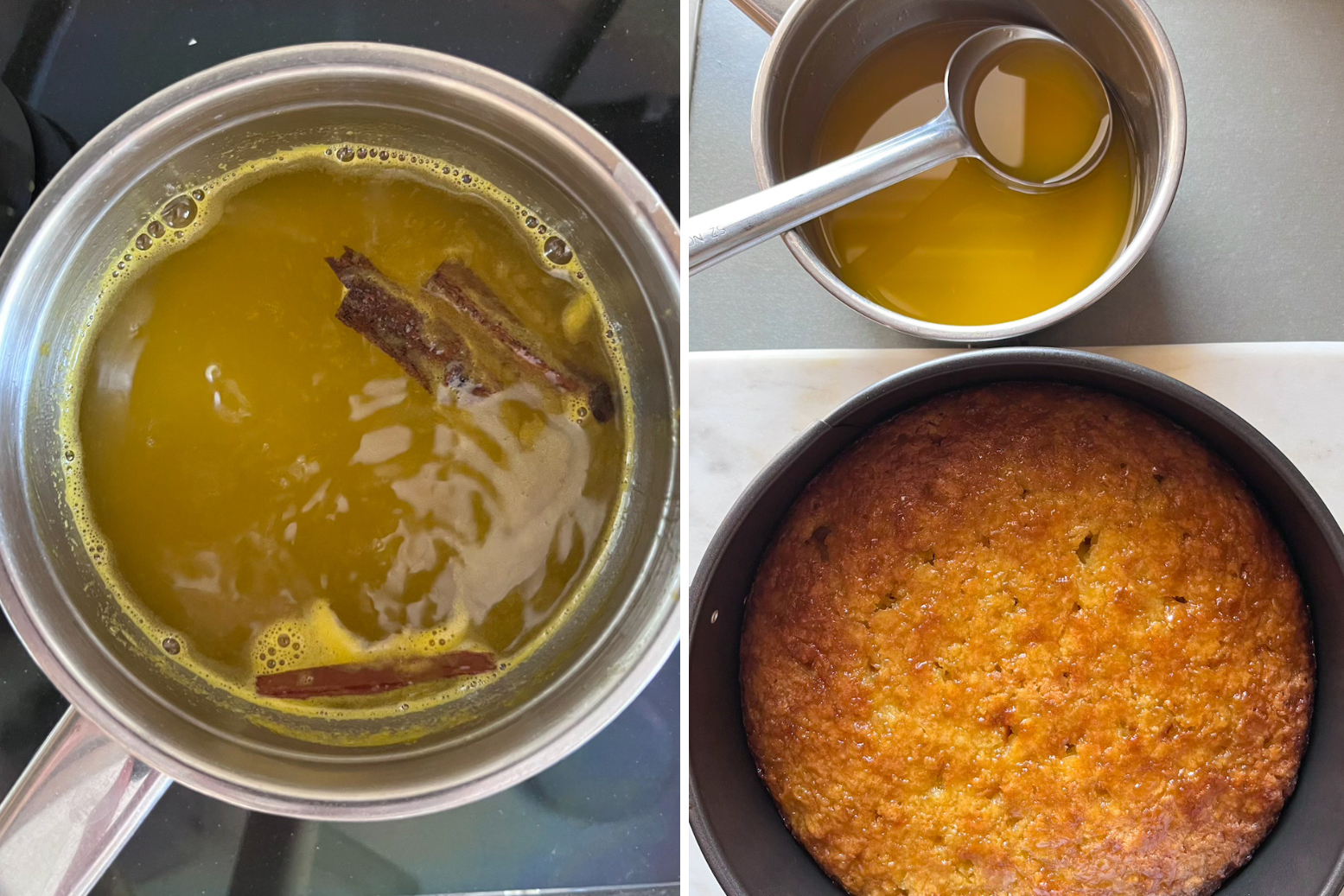
- Next, make the syrup. Combine the syrup ingredients in a small saucepan on high heat and bring to a boil. Then simmer it on low for 15 to 20 minutes till the sugar has completely dissolved. Set aside to cool completely. It will be poured over the hot cake once it's baked.
- Now, make the cake batter. Preheat the oven to 175 C and grease an 8-inch springform pan (or a regular round cake pan).
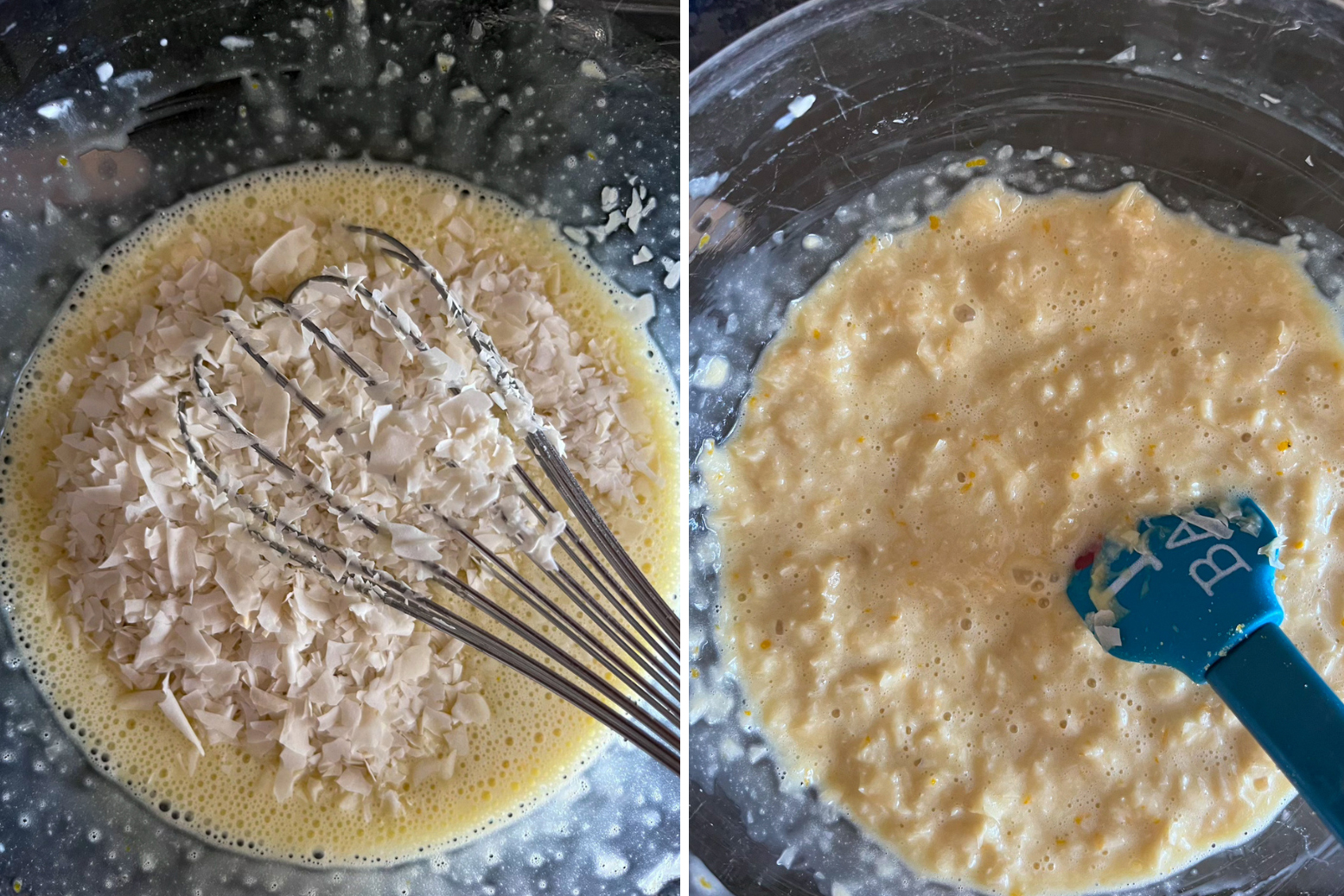
- In a mixing bowl, combine the sugar and orange zest and rub the two together with your fingertips to release more flavour. Add the eggs and whisk vigorously (or use a hand mixer) till pale and frothy, 1 to 2 minutes.
- Add the yoghurt, vanilla, baking powder and baking soda. Whisk to combine, followed by the olive oil and orange juice, whisking again.
- Gradually add the crushed filo, folding it into the batter with a spatula as you go. Adding it all at once could cause the filo to clump together.
- Once it's all incorporated, spread the batter into the prepared pan and bake for 25 to 30 minutes until golden-brown on the top and a toothpick poked in the center comes out clean.
- As soon as the cake is out, use a skewer or fork to poke holes all over the surface, going about halfway in. Pour the syrup, one spoon at a time, waiting till it's absorbed before adding more (this happens quite quickly). If needed, carefully tilt the pan from side to side to distribute any syrup that may have pooled around the edges.
- Let the cake cool completely at room temperature. Slice and serve with a little cream! It actually tastes even better the next day, so if possible, refrigerate it overnight. Store in the fridge in an airtight tin for 4 to 5 days. Happy baking!
Notes